
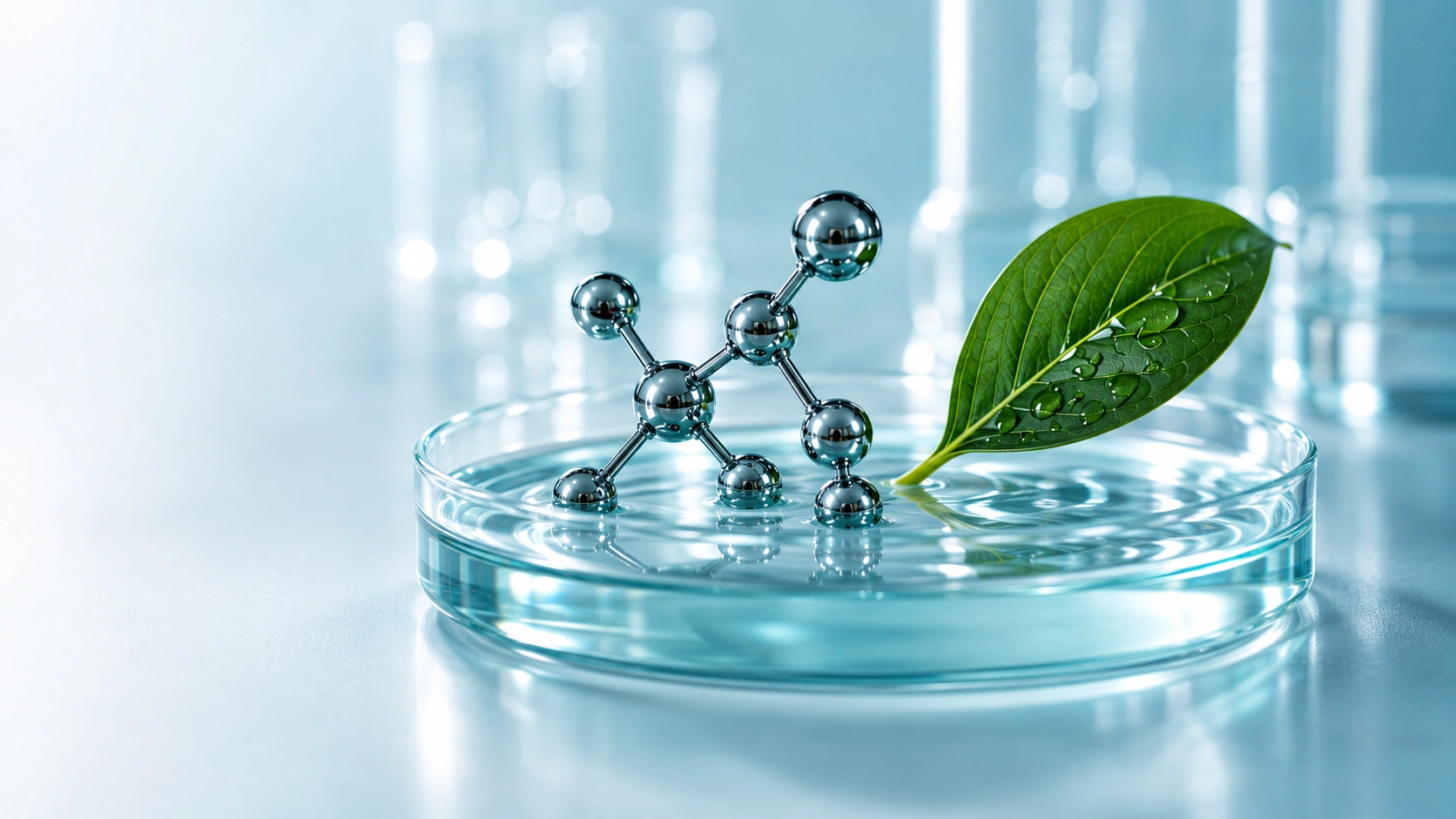
Hyaluronic Acid (HA) is perhaps the most ubiquitously searched term in modern dermatology. Yet the phrase "contains hyaluronic acid" on a label tells only a fraction of the story. The true efficacy of an anti-aging formula relies on the molecular weight and structural configuration of the hyaluronan molecules utilized.
Standard high-molecular-weight hyaluronic acid is an excellent humectant, but its large molecular size limits penetration through the stratum corneum. It remains mainly on the surface, creating a temporary moisture barrier and improving skin comfort.
To achieve an immediate visible lifting effect alongside deeper hydration concepts, advanced skincare often uses dehydrated hyaluronic spheres combined with low-molecular-weight HA. These specialized spheres are processed in a dehydrated state. Upon topical application, their reduced size allows them to settle into the upper layers and micro-grooves of the epidermis.
Once exposed to water, they act like biological sponges, absorbing moisture associated with trans-epidermal water loss (TEWL). As they rehydrate, they swell and create a mechanical push-up effect from within, helping to fill fine lines, plump lip wrinkles and smooth rough texture.
For mature skin over 40, this dual-action approach, surface hydration paired with visible plumping, bridges the gap between instant cosmetic satisfaction and longer-term skin comfort.
For peptide-based anti-aging formulations, HA systems are often paired with bioactive cosmetic peptides. Serox GmbH supplies cosmetic peptides for professional formulation development.
Target Keywords
Hyaluronic spheres skin plumping, low molecular weight hyaluronic acid benefits, instant wrinkle filler, trans-epidermal water loss mature skin.
Scientific References
- PMC: Hyaluronic acid as a key molecule in skin aging
- ScienceDirect: Topically applied hyaluronic acid and delivery research
For cosmetic peptide raw materials used in advanced anti-aging formulations, please contact [email protected].