
 Beyond Botox: The Molecular Science of Argireline® in Modern Anti-Aging-Pflege
Argireline®, also known as Acetyl Hexapeptide-8, is one of the most recognized peptide actives in modern Anti-Aging-Pflege. This article explains how the peptide interacts with SNARE-related signaling behind dynamic facial wrinkles.
Read article
Beyond Botox: The Molecular Science of Argireline® in Modern Anti-Aging-Pflege
Argireline®, also known as Acetyl Hexapeptide-8, is one of the most recognized peptide actives in modern Anti-Aging-Pflege. This article explains how the peptide interacts with SNARE-related signaling behind dynamic facial wrinkles.
Read article
Beyond Botox: The Molecular Science of Argireline® in Modern Anti-Aging-Pflege
Argireline®, also known as Acetyl Hexapeptide-8, is one of the most recognized peptide actives in modern Anti-Aging-Pflege. This article explains how the peptide interacts with SNARE-related signaling behind dynamic facial wrinkles.
Read article
Beyond Botox: The Molecular Science of Argireline® in Modern Anti-Aging-Pflege
Argireline®, also known as Acetyl Hexapeptide-8, is one of the most recognized peptide actives in modern Anti-Aging-Pflege. This article explains how the peptide interacts with SNARE-related signaling behind dynamic facial wrinkles.
Read article
 Molecular Weight Matters: The Synergy of Hyaluronic Spheres and Cross-Linked Hyaluronan
Hyaluronic acid efficacy depends strongly on molecular weight, structural form and delivery strategy. This article explains why hyaluronic spheres, low-molecular-weight HA and cross-linked hyaluronan can create different hydration and visible plumping effects.
Read article
Reversing the Collagen Collapse: How Peptides Rebuild the Dermal Matrix in Mature Skin
Chronological aging and photoaging weaken the dermal matrix, leading to reduced elasticity, sagging and deeper wrinkles. This article explains how signal peptides can support fibroblast activity and collagen synthesis in mature skin.
Read article
Preventing "Tech Neck": How to Treat and Reverse Accelerated Neck Wrinkles
Tech neck describes premature horizontal neck creases and sagging caused by repeated downward head posture. This article explains why the neck is vulnerable and how targeted peptide and humectant formulations can support smoother-looking skin.
Read article
Smooth Contours: The Advanced Dermatological Approach to Vertical Lip Lines
Vertical lip lines and perioral wrinkles are caused by repeated movement, loss of volume and collagen decline. This article explains how neuropeptides and hyaluronic systems can support smoother lip contours without changing expression.
Read article
Decoding "Inflammaging": How Chronic Low-Grade Inflammation Accelerates Skin Aging
Inflammaging describes chronic low-grade inflammation that accelerates visible skin aging. This article explains how cytokines, MMPs and barrier stress contribute to collagen breakdown and why anti-inflammatory skincare strategies matter.
Read article
The Art of Skincare Layering: Maximizing the Bio-Availability of Anti-Aging Serums
Even the best anti-aging serum can underperform if applied in the wrong order. This article explains why viscosity, molecular size and occlusion determine how peptides, hyaluronic acid and creams should be layered.
Read article
Demystifying Crow's Feet: Targeted Science for the Vulnerable Periorbital Zone
Crow’s feet appear early because periorbital skin is thin, low in oil glands and constantly moved by blinking and facial expression. This article explains the science behind targeted eye-area peptide formulations.
Read article
The Sugar-Wrinkle Connection: How Advanced Glycation End-Products (AGEs) Age Skin
Glycation occurs when excess sugar molecules bind to skin proteins, forming advanced glycation end-products. This article explains how AGEs stiffen collagen and elastin and accelerate visible skin aging.
Read article
Dehydrated vs. Dry: Identifying the True Cause of Your Sudden Fine Lines
Dry skin and dehydrated skin can feel similar but require different cosmetic solutions. This article explains why dehydration lines form and how humectants such as hyaluronic acid and glycerin support visible plumping.
Read article
Digital Aging: How Blue Light Exposure Accelerates Hyperpigmentation and Wrinkle Formation
High-energy visible light from screens and LED lighting can contribute to oxidative stress, pigmentation and visible digital photoaging. This article explains how HEV light affects collagen, melanocytes and modern anti-aging formulation strategy.
Read article
Why Most Peptides Fail: The Critical Importance of Transdermal Delivery Systems
Peptide activity alone does not guarantee cosmetic efficacy. This article explains why transdermal delivery, peptide stability and encapsulation systems are critical for advanced Anti-Aging-Pflege.
Read article
The Skin Microbiome: Why Bacterial Balance Determines Skin Aging
The skin microbiome regulates inflammation, hydration and barrier function. This article explains how microbial imbalance can accelerate inflammaging and why microbiome-friendly skincare matters in anti-aging routines.
Read article
Free Radicals and Oxidative Stress: The Hidden Chain Reaction Behind Premature Aging
Oxidative stress is a central driver of premature skin aging. This article explains how ROS damage collagen, elastin, DNA and the lipid barrier, and why antioxidant peptide strategies matter.
Read article
Barrier Repair Therapy: Why Healthy Skin Starts With Lipid Restoration
A compromised skin barrier can increase TEWL, irritation and visible fine lines. This article explains how ceramides, cholesterol, fatty acids and soothing peptides support barrier repair therapy.
Read article
Why Skin Sags: The Structural Breakdown Behind Facial Volume Loss
Facial sagging is driven by collagen decline, fat-pad changes, connective tissue laxity and structural support loss. This article explains why tensor peptides and volumizing HA complexes matter.
Read article
Peptides vs. Retinol: Understanding the Difference Between Repair and Renewal
Retinol accelerates renewal, while peptides act as biological messengers for repair-oriented signaling. This article compares retinoids and peptides for mature or sensitive anti-aging routines.
Read article
Night Repair Science: How Circadian Rhythms Control Skin Regeneration
Skin follows a 24-hour biological clock, defending during the day and repairing at night. This article explains how circadian rhythms shape peptide-rich night routines and anti-aging strategy.
Read article
Ceramides Explained: The Essential Lipids That Keep Mature Skin Firm and Hydrated
Ceramides are essential barrier lipids that maintain hydration, elasticity and resilience. This article explains why ceramide levels decline with age and how barrier-supportive formulas help mature skin.
Read article
Urban Skin Aging: How Pollution Accelerates Wrinkles and Loss of Elasticity
Urban pollution exposes skin to PM2.5, ozone and industrial toxins that trigger oxidative stress, inflammation and collagen breakdown. This article explains anti-pollution skincare strategy.
Read article
Molecular Weight Matters: The Synergy of Hyaluronic Spheres and Cross-Linked Hyaluronan
Hyaluronic acid efficacy depends strongly on molecular weight, structural form and delivery strategy. This article explains why hyaluronic spheres, low-molecular-weight HA and cross-linked hyaluronan can create different hydration and visible plumping effects.
Read article
Reversing the Collagen Collapse: How Peptides Rebuild the Dermal Matrix in Mature Skin
Chronological aging and photoaging weaken the dermal matrix, leading to reduced elasticity, sagging and deeper wrinkles. This article explains how signal peptides can support fibroblast activity and collagen synthesis in mature skin.
Read article
Preventing "Tech Neck": How to Treat and Reverse Accelerated Neck Wrinkles
Tech neck describes premature horizontal neck creases and sagging caused by repeated downward head posture. This article explains why the neck is vulnerable and how targeted peptide and humectant formulations can support smoother-looking skin.
Read article
Smooth Contours: The Advanced Dermatological Approach to Vertical Lip Lines
Vertical lip lines and perioral wrinkles are caused by repeated movement, loss of volume and collagen decline. This article explains how neuropeptides and hyaluronic systems can support smoother lip contours without changing expression.
Read article
Decoding "Inflammaging": How Chronic Low-Grade Inflammation Accelerates Skin Aging
Inflammaging describes chronic low-grade inflammation that accelerates visible skin aging. This article explains how cytokines, MMPs and barrier stress contribute to collagen breakdown and why anti-inflammatory skincare strategies matter.
Read article
The Art of Skincare Layering: Maximizing the Bio-Availability of Anti-Aging Serums
Even the best anti-aging serum can underperform if applied in the wrong order. This article explains why viscosity, molecular size and occlusion determine how peptides, hyaluronic acid and creams should be layered.
Read article
Demystifying Crow's Feet: Targeted Science for the Vulnerable Periorbital Zone
Crow’s feet appear early because periorbital skin is thin, low in oil glands and constantly moved by blinking and facial expression. This article explains the science behind targeted eye-area peptide formulations.
Read article
The Sugar-Wrinkle Connection: How Advanced Glycation End-Products (AGEs) Age Skin
Glycation occurs when excess sugar molecules bind to skin proteins, forming advanced glycation end-products. This article explains how AGEs stiffen collagen and elastin and accelerate visible skin aging.
Read article
Dehydrated vs. Dry: Identifying the True Cause of Your Sudden Fine Lines
Dry skin and dehydrated skin can feel similar but require different cosmetic solutions. This article explains why dehydration lines form and how humectants such as hyaluronic acid and glycerin support visible plumping.
Read article
Digital Aging: How Blue Light Exposure Accelerates Hyperpigmentation and Wrinkle Formation
High-energy visible light from screens and LED lighting can contribute to oxidative stress, pigmentation and visible digital photoaging. This article explains how HEV light affects collagen, melanocytes and modern anti-aging formulation strategy.
Read article
Why Most Peptides Fail: The Critical Importance of Transdermal Delivery Systems
Peptide activity alone does not guarantee cosmetic efficacy. This article explains why transdermal delivery, peptide stability and encapsulation systems are critical for advanced Anti-Aging-Pflege.
Read article
The Skin Microbiome: Why Bacterial Balance Determines Skin Aging
The skin microbiome regulates inflammation, hydration and barrier function. This article explains how microbial imbalance can accelerate inflammaging and why microbiome-friendly skincare matters in anti-aging routines.
Read article
Free Radicals and Oxidative Stress: The Hidden Chain Reaction Behind Premature Aging
Oxidative stress is a central driver of premature skin aging. This article explains how ROS damage collagen, elastin, DNA and the lipid barrier, and why antioxidant peptide strategies matter.
Read article
Barrier Repair Therapy: Why Healthy Skin Starts With Lipid Restoration
A compromised skin barrier can increase TEWL, irritation and visible fine lines. This article explains how ceramides, cholesterol, fatty acids and soothing peptides support barrier repair therapy.
Read article
Why Skin Sags: The Structural Breakdown Behind Facial Volume Loss
Facial sagging is driven by collagen decline, fat-pad changes, connective tissue laxity and structural support loss. This article explains why tensor peptides and volumizing HA complexes matter.
Read article
Peptides vs. Retinol: Understanding the Difference Between Repair and Renewal
Retinol accelerates renewal, while peptides act as biological messengers for repair-oriented signaling. This article compares retinoids and peptides for mature or sensitive anti-aging routines.
Read article
Night Repair Science: How Circadian Rhythms Control Skin Regeneration
Skin follows a 24-hour biological clock, defending during the day and repairing at night. This article explains how circadian rhythms shape peptide-rich night routines and anti-aging strategy.
Read article
Ceramides Explained: The Essential Lipids That Keep Mature Skin Firm and Hydrated
Ceramides are essential barrier lipids that maintain hydration, elasticity and resilience. This article explains why ceramide levels decline with age and how barrier-supportive formulas help mature skin.
Read article
Urban Skin Aging: How Pollution Accelerates Wrinkles and Loss of Elasticity
Urban pollution exposes skin to PM2.5, ozone and industrial toxins that trigger oxidative stress, inflammation and collagen breakdown. This article explains anti-pollution skincare strategy.
Read article
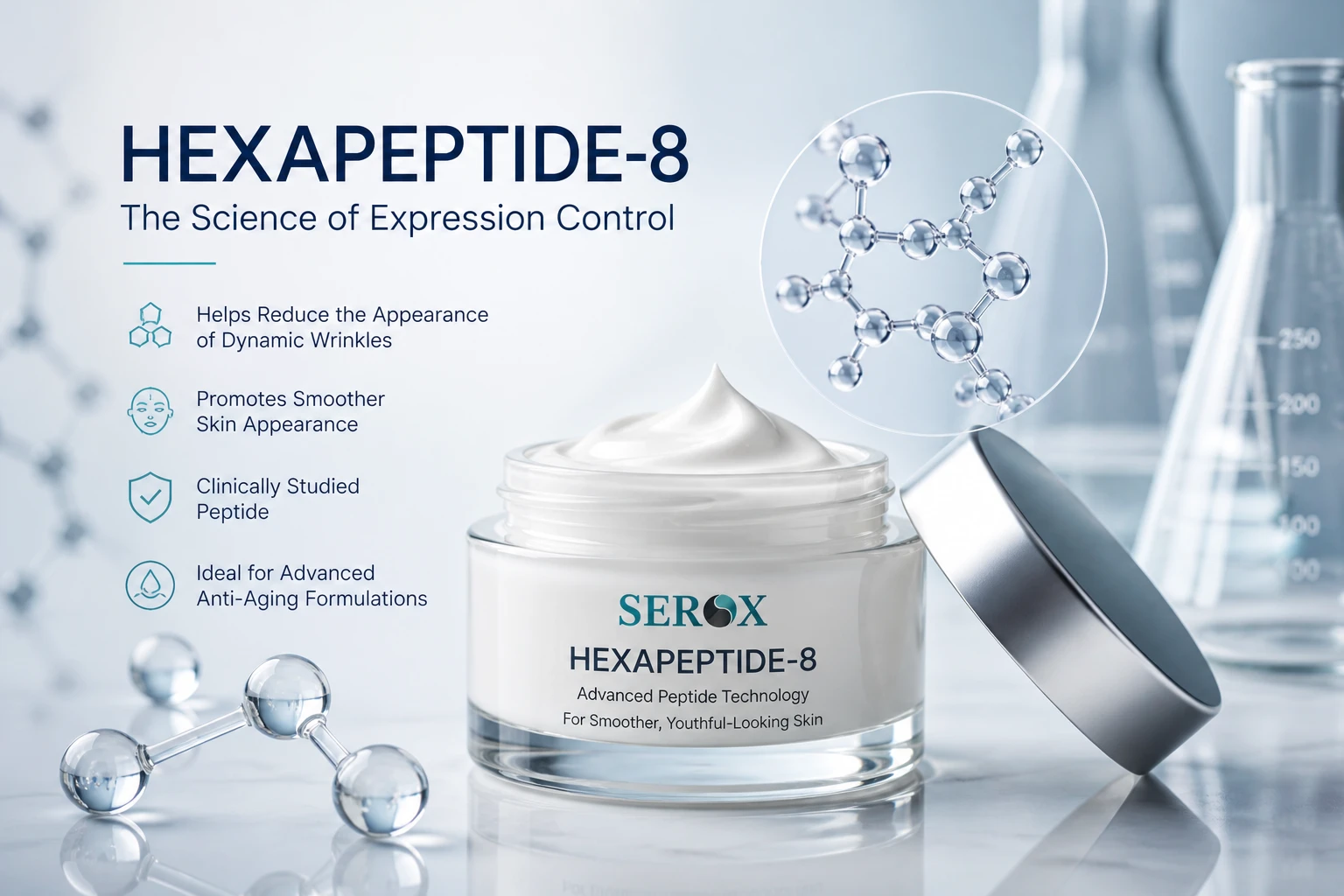 Hexapeptide-8 (Acetyl Hexapeptide-8): Mechanism, Benefits, and Manufacturing Insights
Hexapeptide-8, also known as Acetyl Hexapeptide-8 or Argireline®, is one of the most widely used cosmetic peptides in modern anti-aging formulations. Known for its ability to reduce the appearance of expression lines, this short-chain peptide has become a key ingredient in high-performance skincare products.
For companies developing advanced cosmetic formulations, sourcing high-purity Hexapeptide-8 from a reliable manufacturer is critical to ensuring consistent product performance.
Read article
Hexapeptide-8 (Acetyl Hexapeptide-8): Mechanism, Benefits, and Manufacturing Insights
Hexapeptide-8, also known as Acetyl Hexapeptide-8 or Argireline®, is one of the most widely used cosmetic peptides in modern anti-aging formulations. Known for its ability to reduce the appearance of expression lines, this short-chain peptide has become a key ingredient in high-performance skincare products.
For companies developing advanced cosmetic formulations, sourcing high-purity Hexapeptide-8 from a reliable manufacturer is critical to ensuring consistent product performance.
Read article
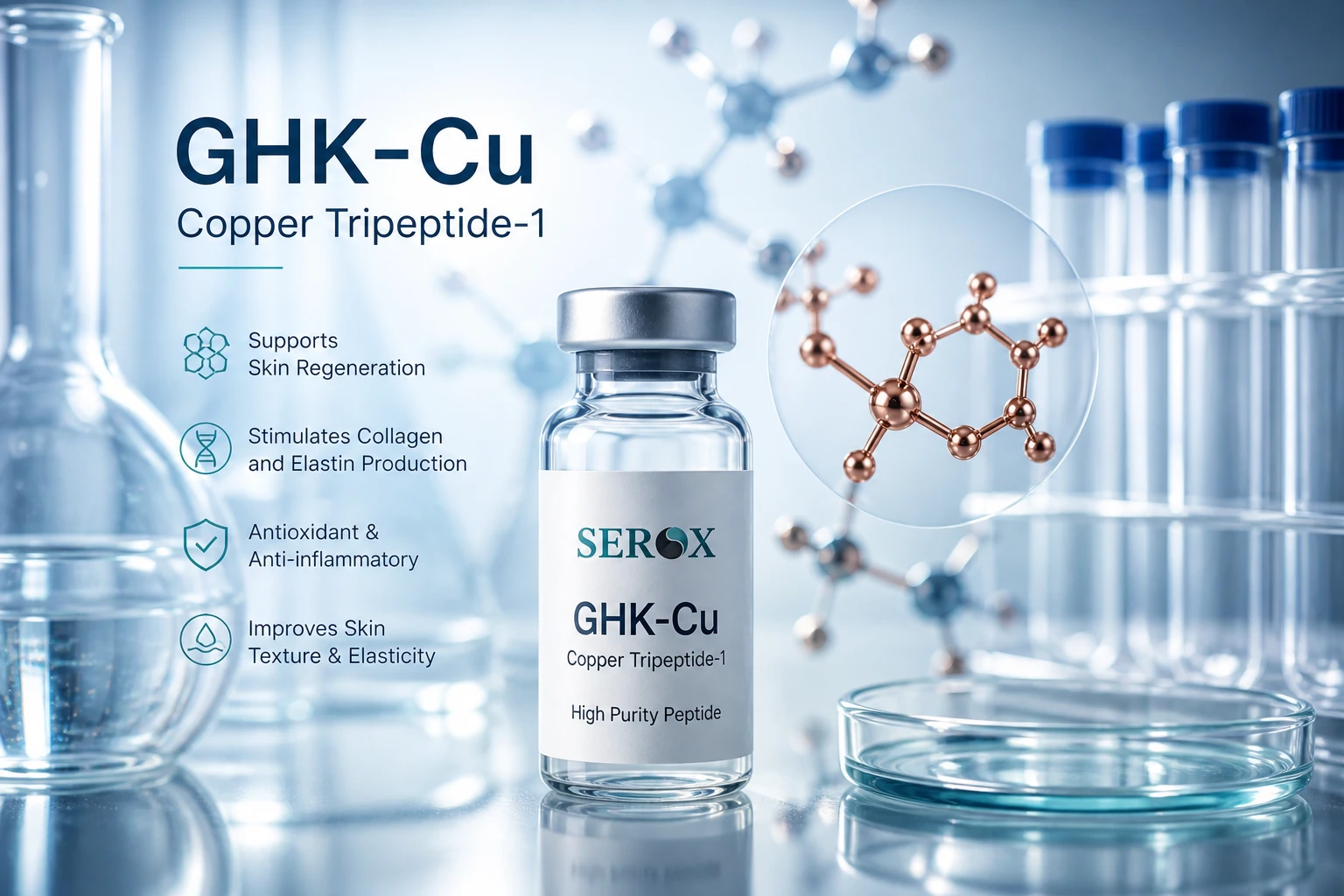 GHK-Cu (Copper Peptide): Mechanism, Benefits, and Role in Advanced Cosmetic Formulations
GHK-Cu, also known as Copper Tripeptide-1, is a well-studied bioactive peptide widely used in modern skincare formulations. Originally identified in human plasma, this naturally occurring tripeptide complexed with copper ions has gained significant attention for its role in skin regeneration, collagen synthesis, and overall skin health.
Today, GHK-Cu is considered one of the most versatile and scientifically supported peptides in cosmetic science.
Read article
GHK-Cu (Copper Peptide): Mechanism, Benefits, and Role in Advanced Cosmetic Formulations
GHK-Cu, also known as Copper Tripeptide-1, is a well-studied bioactive peptide widely used in modern skincare formulations. Originally identified in human plasma, this naturally occurring tripeptide complexed with copper ions has gained significant attention for its role in skin regeneration, collagen synthesis, and overall skin health.
Today, GHK-Cu is considered one of the most versatile and scientifically supported peptides in cosmetic science.
Read article
Technical Peptide Manufacturing Support from Germany
Serox GmbH supports industrial and research peptide projects from Mannheim, Germany with ISO 9001 quality management, Cosmetic GMP ISO 22716 standards, advanced analytical quality control and a team bringing over 20 years of peptide manufacturing expertise. Our peptide services are intended for professional industrial and research use only and are not intended for food or sport purposes.